

You arrive to wind, wide horizons and a mosaic of dry stone walls. The Peak District feels both intimate and vast: steep gritstone edges that invite climbers and walkers, secretive limestone dales threaded with rivers, and a long human story from medieval halls to early mills. This guide points you to signature places and the character that makes the Peaks special. It is designed to help holiday guests plan interesting days and to show holiday‑home owners how a tailored digital guide can enhance stays.

Explore the The Peak District Guidebook
Open the interactive The Peak District guidebook to discover local attractions, places to eat, scenic walks and one-tap directions to every recommendation. No app is required.
The Peak District at a Glance
- Best for: Walking, country cottages, show caves and historic houses
- Known for: Gritstone edges, limestone dales, dry stone walls and early industrial valleys
- Good to know: Towns like Bakewell and Buxton act as useful bases; weather can change quickly on the moorland
Gritstone edges and a walking culture
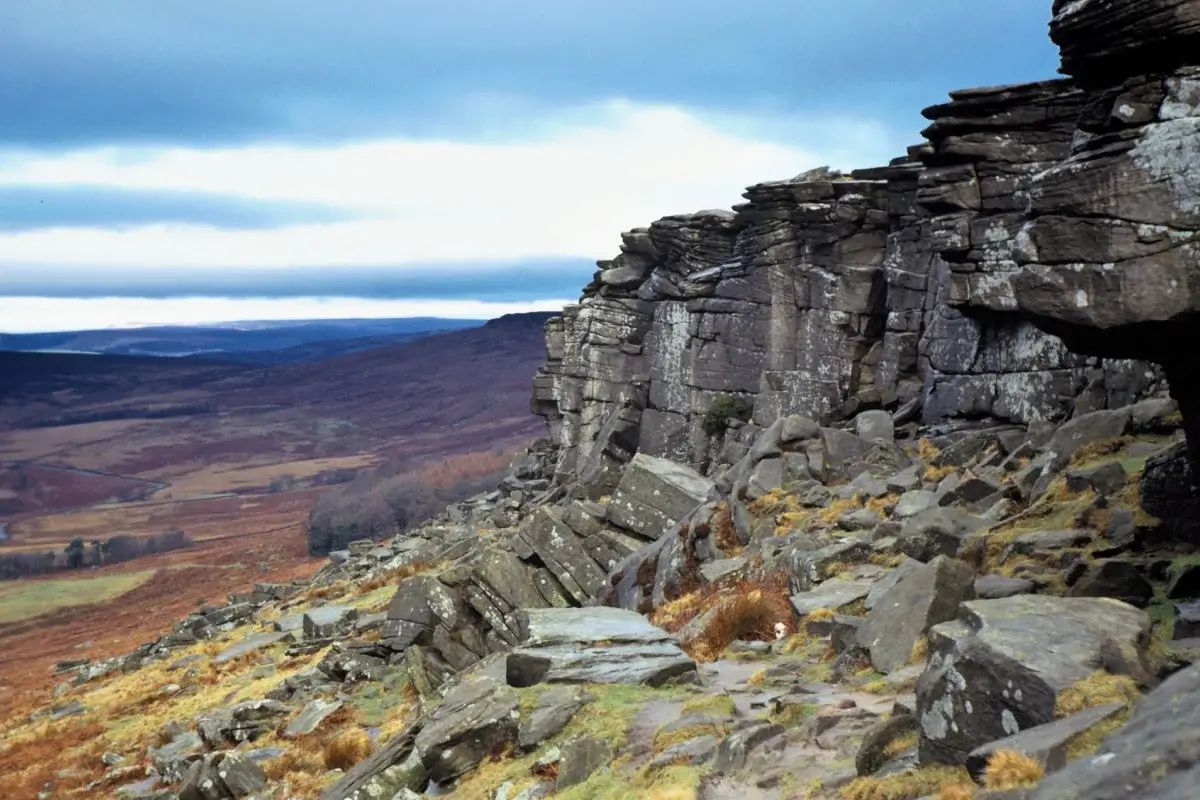
The Peak District is where British climbing traditions and long‑distance walking routes took shape. Places such as Stanage Edge and Kinder Scout present sheer gritstone escarpments and broad, windswept plateaux.
Walkers and climbers will recognise the culture here: reproducible routes, packed footpaths and an appetite for early starts to catch the light. Popular ridgelines provide views that open across a patchwork of fields and distant hills.
Limestone dales, stepping stones and subterranean treasures
The pale cliffs of Dovedale and Lathkill Dale carve intimate river valleys where stepping stones and fossil‑rich outcrops are common sights. These dales feel enclosed and private even on busy days, offering shallow rivers and compact gorge scenery.
Beneath them lies a different world. Show caves such as the Blue John Cavern preserve a small‑scale lapidary tradition. The rare Blue John mineral gives rockwork and local craft a distinctive, almost subterranean signature.
Early industry and the shaping hand of country estates
Narrow river valleys host steep‑sided mill complexes and canals that were central to the Industrial Revolution. Cromford Mill is an evocative example of how businesses once harnessed the Peaks’ rivers to power workshops and textile production.
At the same time, grand estates have long structured the landscape. Chatsworth House and Haddon Hall anchor designed parkland and agricultural tenancies that still shape routes, views and local economies.
Patchwork walls, market towns and village life
A dense mosaic of dry stone walls, sheep fields and drystone farms gives the Peak District a strong pastoral character. This sense of enclosure creates a distinctive rhythm to walks and drives across the moors.
Market towns and villages provide counterpoint. Bakewell with its pudding tradition, Buxton with its spa town heritage, and smaller centres such as Castleton and Hathersage offer shops, cafés and a reminder that the Peaks are a living, working landscape.
Explore The Peak District on the Map
See where the featured towns, attractions and natural landmarks are located, then select a marker for directions.
Explore the The Peak District Guidebook
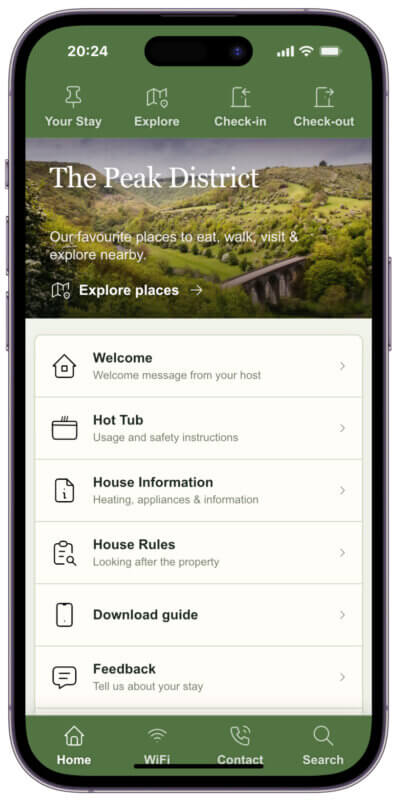
Open the interactive The Peak District guidebook to discover local attractions, places to eat, scenic walks and one-tap directions to every recommendation. No app is required.
View the The Peak District Digital Guest Guide
Own a Holiday Home in The Peak District?
Guests come to the Peaks for local knowledge: which walk to choose for a sunrise view, where to buy provisions, and how to plan a wet‑weather day. A bespoke digital guest guide can collect that information and present it clearly to every new arrival.
HostyGuides creates tailored guides for holiday homes across the region, helping owners reduce repetitive queries and raise guest satisfaction. If you manage a self‑catering property, a professionally written, localised guidebook is an efficient way to share the character and practical benefits of your location.
Frequently Asked Questions
What is the best time of year to visit the Peak District?
The Peaks are popular year‑round. Late spring through early autumn often brings milder weather for walking and open attractions, while winter offers dramatic skies and quieter trails. Weather on the moors can change quickly so plan accordingly.
Which experiences are signature to the Peak District?
Classic experiences include ridge walks on Stanage Edge, traversing Kinder Scout, paddling or photo stops at Dovedale’s stepping stones, visiting show caves like Blue John Cavern and touring estate houses such as Chatsworth or Haddon Hall.
Are the walking routes suitable for families?
Many routes are family friendly, but gradients and exposed edges can be challenging. Choose shorter valley walks for young children and check local information on trail difficulty before setting out.
Can I bring my dog to the Peak District?
Dogs are welcome in much of the Peak District, including many trails and open countryside. Owners should keep dogs under control near livestock, follow any local signage and take dog‑waste bags for disposal.
How can I travel around without a car?
Towns and larger villages are served by public transport, but some rural dales and trailheads are easier to reach by car or taxi. Plan connections in advance and check timetables as services can change.
Is the terrain safe for novice climbers on gritstone edges?
Gritstone edges attract climbers of all levels. Novice climbers should seek instruction from qualified providers and use appropriate equipment. Many popular crags also suit walkers who keep to well‑marked paths.